
This project is an attempt to narrate Jain Mandir: as a heritage site, as a place of worship, as a traffic intersection, as a bureaucratic object, as a location of violence, as a caricature, and as a monument.
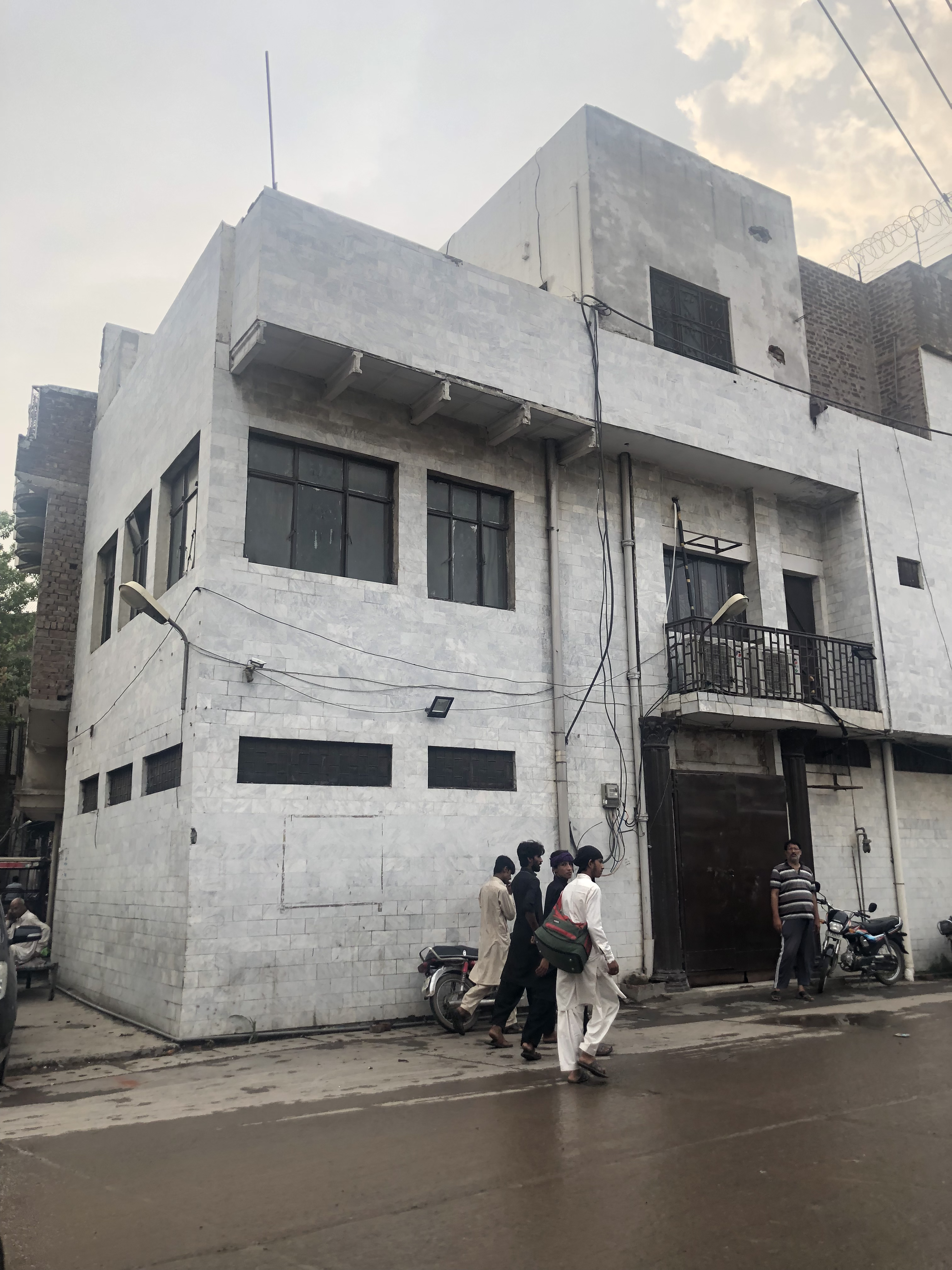
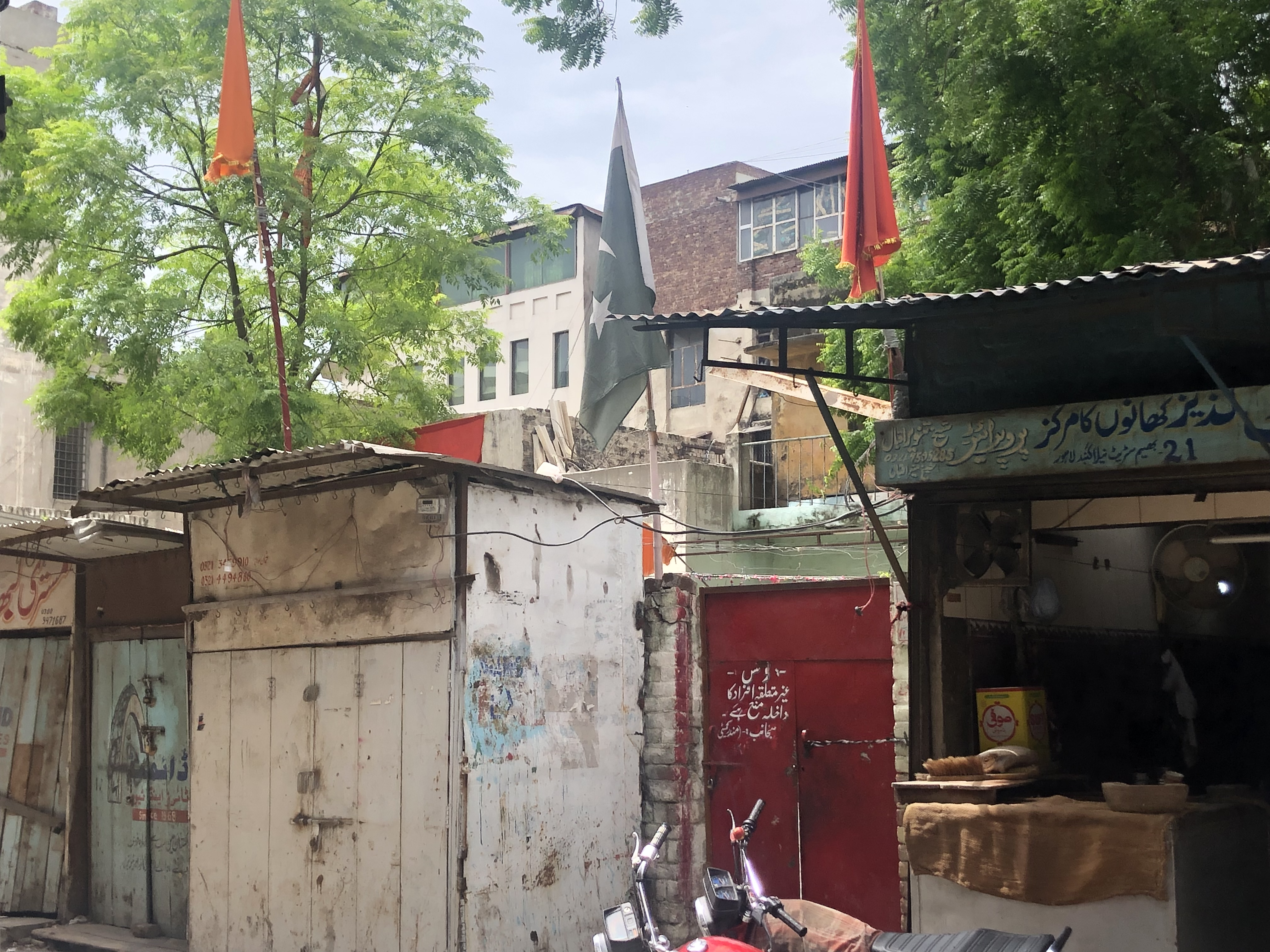
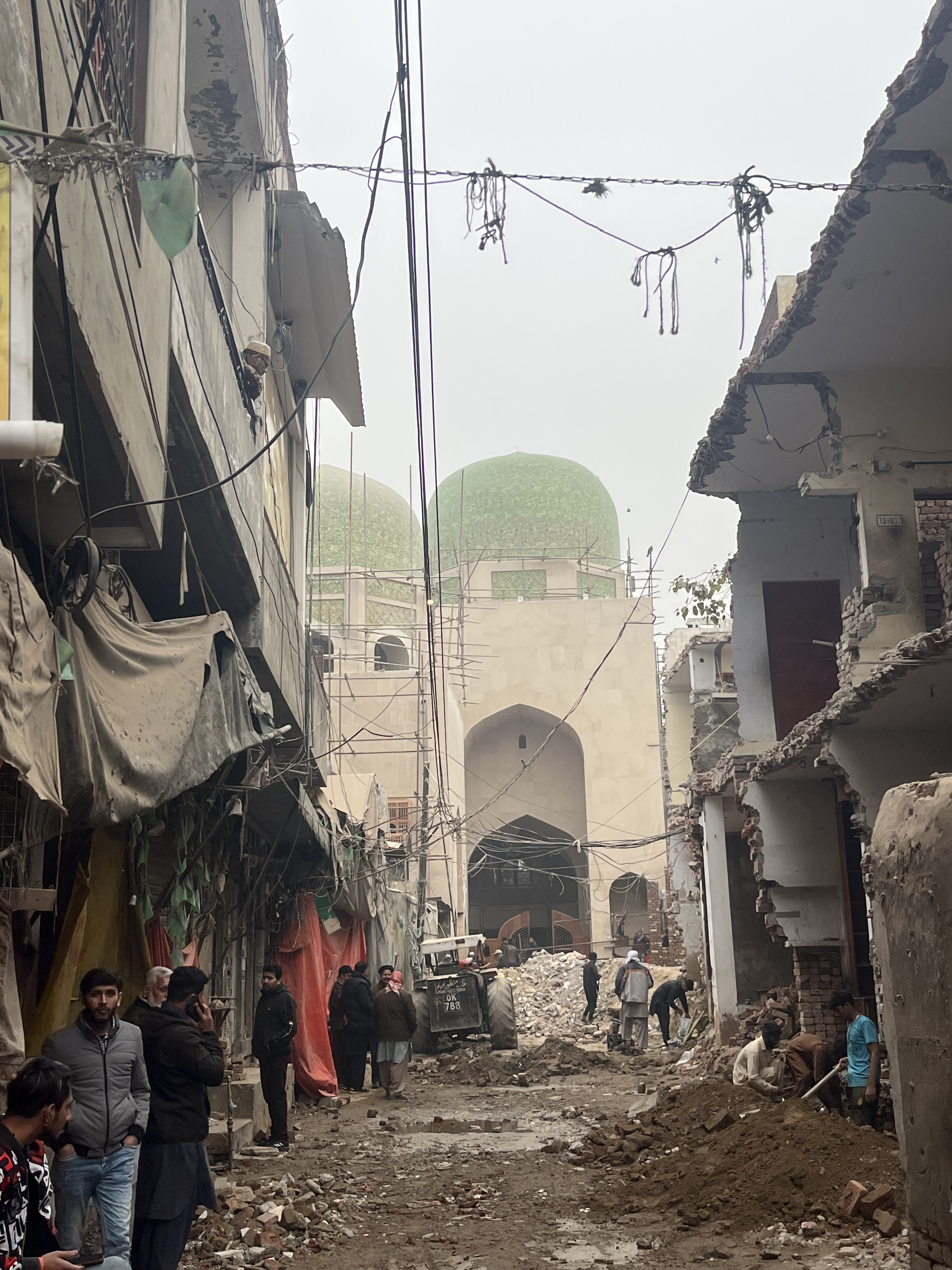
The site now marked as Jain Mandir was reportedly Lahore’s largest temple complex at the time of the 1947 Partition. Now, it stands as a quasi-monument in one of Lahore’s busiest intersections, located just outside of the Anarkali Metro Station.
Using a polyvalent approach, I attempt to use Lahore’s Jain Mandir, its history, and its repair in 2022 as a way to excavate the history of the city and disentangle, both literally and figuratively, Jain Mandir’s layers of violence and stucco. Using Jain Mandir as a point of departure, I analyze the various heritage regimes present in the city and their implications for historical understanding.
I divide this story into three parts, and I choose to begin the story at Death. The Death, Decay, and Rebirth sections contain the bulk of my argument, exploring how the story of Jain Mandir can both visibilize and obfuscate the story of the city and its heritage.
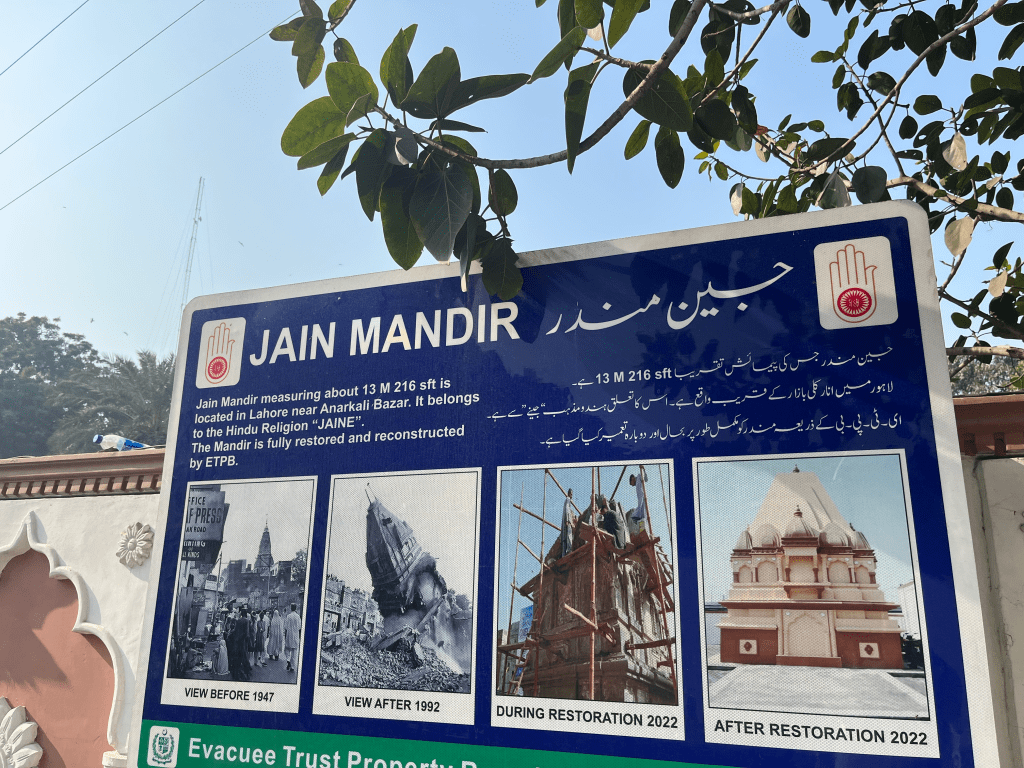
Starting at the moment of Jain Mandir’s death in 1992 is a provocation, as Jain Mandir’s death is foretold in the 1947 Partition. During Partition, intercommunal violence was vented on the very structures that marked the Other. As Shams Gill told me once, “in Pakistan, the Hindus have never been persecuted, but the anger against us has been vented on our temples.” I compare the synced events of the Babri Masjid demolition in Ayodhya, India and the violence against temples in Lahore in 1992 to make a point around hostage theory and its relationship to architecture.
The decaying carcass of Jain Mandir as it stood after 1992 was significant on multiple levels, most noticeably as a story of bureaucratic neglect. The governmental bodies responsible for the upkeep of the temple, ETPB and Auqaf among others, let the remaining turret lay on its side where it was destroyed. I scrutinize the spectral presence of Jain Mandir at this location for over 25 years, while using key concepts from urban ruin theory to contextualize its meaning as an unbuilt form in the environs and the various interpretations the ruins occupy.
The sudden rebirth of Jain Mandir in December 2022 marked an attempt by the state to intervene in the decay and beautify the temple. Visibilized by a host of factors, Jain Mandir was a location eligible for the set of bureaucratic bodies to repair. I place this development in the context of the Pakistani state at a particular moment, while analyzing the new Jain Mandir’s utility as an object, as a place of worship, and as a monument for public history.
Official signage marking the site of the temple after the repair.

There are other pieces of Jain Mandir and the city I explore in my Field Notes, which detail the valences I am engaging in this project. These notes reveal more about the personal encounter with the temple, characters across the project, and the theoretical frameworks I am using.
Finally, there are also other heritage sites that unfold the process of history and heritage in Lahore. I engage them to comment on the contestation of public heritage and spatial politics in the city.
 The Death of Jain Mandir