

Anarkali’s BAsuli
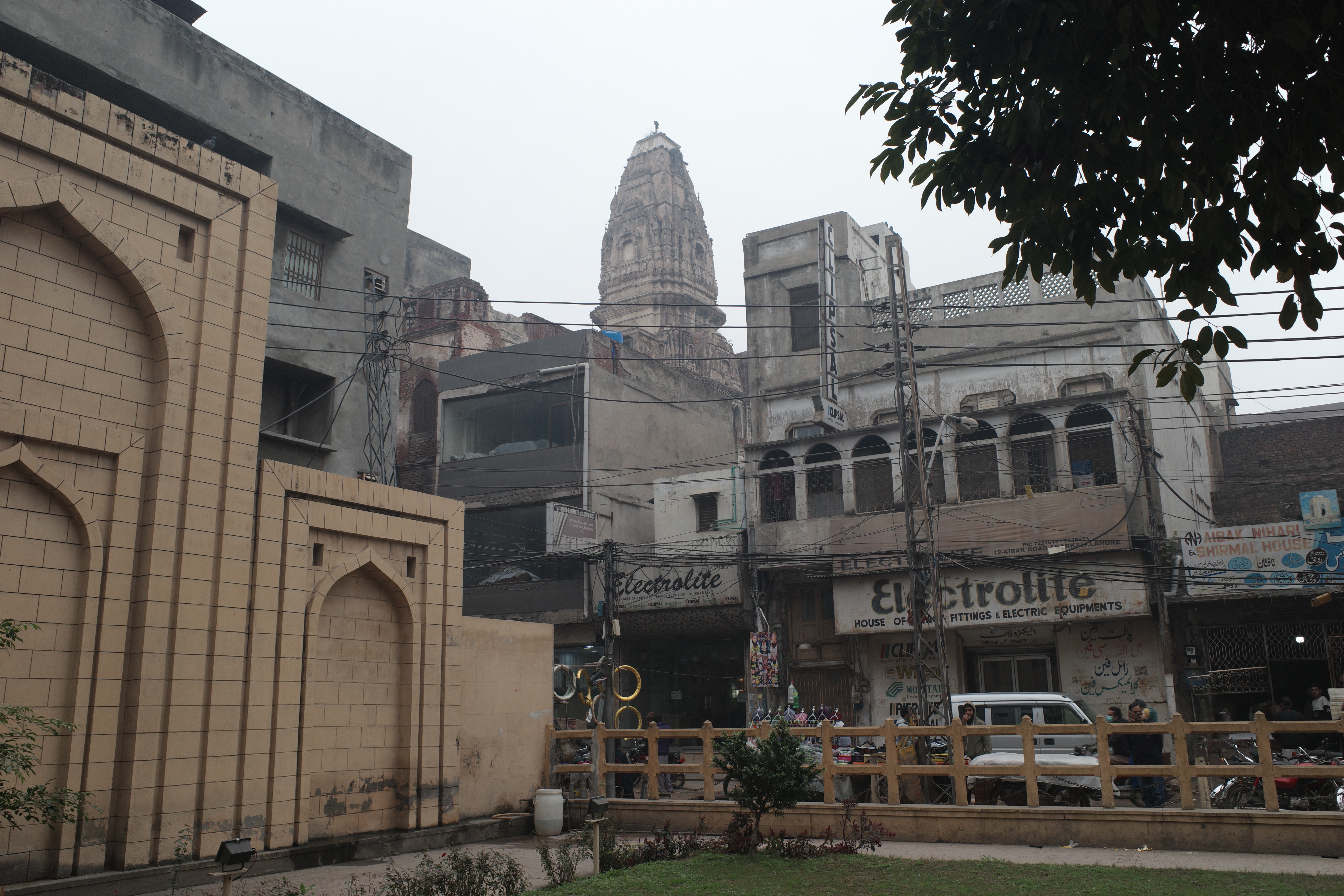
Hanuman Temple
Lahore is an ancient city, but it is also a city jarringly without an archive. Manan Ahmed’s Disrupted City is key to unlocking the experience of the archive in the city of Lahore. I quote him at length here:
“Archives remain ambiguous spaces for contemplating the history of Lahore. Lahore, as a city, as a municipal and civic entity, has no official archive… No repository contains documentary proof of its working, its happenings, or its inhabitants … All of them are colonial-era institutions, created largely to serve the ruling elite. Even after independence, there remain barriers of entry to them. The result is that to construct a history of the city, one must turn to memoirs, writings of experience, or self-referential paeans to Lahore’s past” (Ahmed 2024)
Ahmed’s argument is that the past is rendered “inchoate” by the lack of sustained access to the archive of any bureaucratic agency. Often, bureaucrats police the access to these documents themselves, but inevitably, it is the lack of archival record that makes access so difficult in Pakistan’s context.
I argue that this archive is purposefully opaque. Thus, the experience of accessing, encountering, and assembling the archive becomes significant, as this act of hiding and opaqueness is emblematic of the fragmented encounter with the state itself. This encounter can visibilize the contradictions in heritage-making as a national process.
I detail my experience finding information about Jain Mandir in another section, but I want to make explicit the ways that bureaucratic control reinstantiates itself particularly through heritage, as authority over heritage is authority over history.
James Ferguson argues that the bureaucracy is an “anti-politics machine” in his analysis of Lesotho’s anti-poverty programmes. He argues that international development agencies and bureaucratic systems deliberately (or inadvertently) depoliticize poverty and inequality, turning complex socio-political issues into neutral, technical problems to be “solved” by experts.
Key to this argument is that bureaucracies reduce political struggles (e.g., class conflict, colonial legacies) into administrative checklists, making them seem apolitical. The Evacuee Trust Property Board (ETPB) is the statutory and administrative board of the Government of Pakistan, which is in charge of all so-called “evacuee properties,” those properties left behind by Hindus and Sikhs who were forced to India after partition. In many ways, the ETPB is an attempt to bureaucratize partition violence, especially as it suspends in time the ethnic cleansing of 1947. Having these properties in a “trust” implies a return, a return or appropriation, a return which is no longer feasible or even desirable.
The ETPB is notorious for its opaque modus operandi, wherein we have no idea which properties they control or what they can claim, mirroring the nation-state’s access to archives and coercive power. Beyond just bringing heritage more in line with the nation-state, the bureaucratic approach to heritage necessitates abstraction, wherein the state becomes the mediator of interfaith relations through its encounter with heritage.
The Palimpsest
Basuli Hanuman Temple seen from Qutubdin Aibak’s tomb.
The ETPB’s “anti-politics machine” utterly transmogrifies Jain Mandir into a zombie of stucco, but it also has implication for history. Returning to Manan Ahmed’s historiography, I want to draw attention to two authoritative accounts of Lahore’s history: Tareekh e Lahore by Kanhaiya Lal and Lahore by Syed Muhammad Latif. These accounts transform history into a series of segregations of the past, dividing up Lahore’s history between teleologies of conquest by Mughal, Sikh, and British rulers, rather than a palimpsest conception of history where the past continues to continue into the present. I argue that Jain Mandir’s rehabilitation by the ETPB mirrors these accounts of history, an attempt at abnegating the palimpsest.
 The Death of Jain Mandir